Technology & Innovation

Latest Technology & Innovation news, trends, and ideas shaping the future.

AI & SoftwareTech GuidesTechnology & Innovation

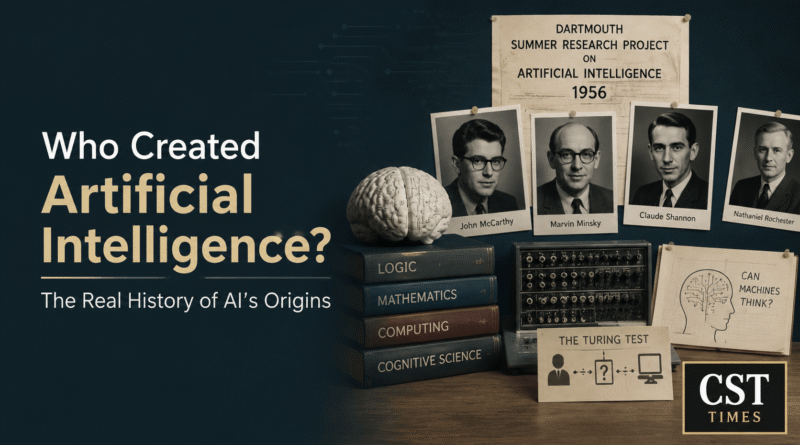
Who Created Artificial Intelligence? The Real History of AI’s Origins

No single person invented artificial intelligence. The theoretical groundwork was laid by British mathematician Alan Turing in the 1930s and 1940s, but AI became an actual field of study in the summer of 1956, when computer scientist John McCarthy organized the Dartmouth Summer Research Project on Artificial Intelligence — the event where McCarthy coined the term “artificial intelligence” itself. He worked alongside Marvin Minsky, Claude Shannon, and Nathaniel Rochester to plan it, and it’s this small group, not one lone inventor, that historians usually credit with founding AI as a discipline.

Read More

AI & SoftwareTechnology & Innovation

What is NVIDIA Nemotron? Models, Pricing & How to Use It (2026 Guide)

NVIDIA Nemotron is a family of open AI models built to power AI agents rather than a single chatbot product. If you have seen the name attached to reasoning benchmarks, coding tools, or NVIDIA’s GTC keynotes and wondered what it actually is, this guide answers that directly, then walks through how the models work, what they cost, and how to start using one today.

Read More
Tech GuidesTechnology & Innovation

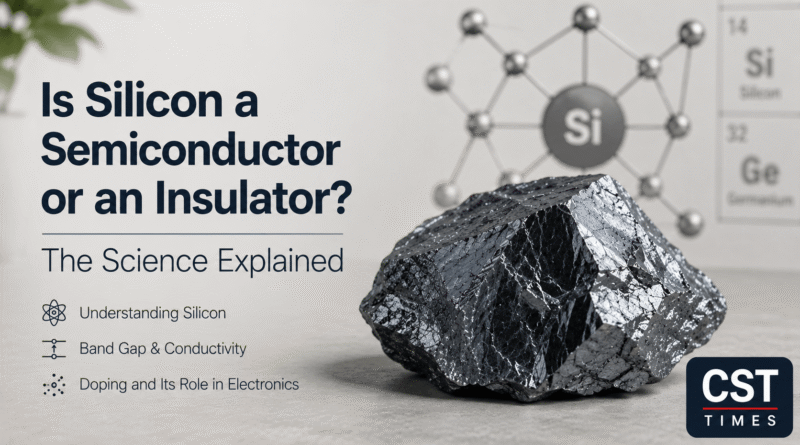
Is Silicon a Semiconductor or an Insulator? The Science Explained

Silicon is a semiconductor, not an insulator. It sits in the electrical middle ground between materials that conduct easily, like copper, and materials that block current almost entirely, like glass or rubber. That in-between behavior isn’t a flaw — it’s the exact property that makes silicon the material behind almost every computer chip in use today.

Read More
AI & SoftwareTech GuidesTechnology & Innovation

What Is an AI Chip? How AI Chips Work and Why They Matter

An AI chip (also known as an AI accelerator or AI processor) is a specialized silicon processor engineered to perform the complex mathematical operations behind machine learning and deep learning. Unlike traditional CPUs that process general tasks sequentially, AI chips excel at performing massive parallel calculations—such as matrix multiplication and tensor processing—at high speeds and lower power consumption. Common types include GPUs, TPUs, and NPUs.

Read More